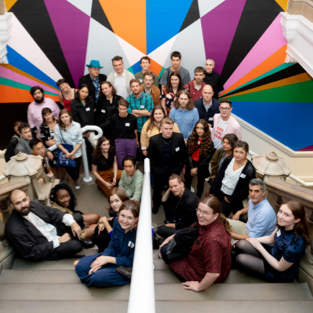
Emma is an artist organiser based in Southend-on-Sea. She set up TOMA in 2016 and this year launched a new book ‘How to set up an art school’.
15 December 2025
TOMA is an accessible artist-run education model that is currently the only postgrad-ish level art programme in Essex after all others were stopped by their host universities, which is wild. It was set up in direct response to the cuts to higher education, increases in fees and the inaccessibility of traditional models due to barriers including time, geography, money and other less visible hierarchies that make traditional MAs almost impossible to participate in.
TOMA is an 18-month learning programme and has a structure not too dissimilar to art-school-as-we-know-it with crits, exhibitions, off site visits, residencies, tutorials, visiting artists, workshops and hanging out. In this way, TOMA is nothing new. We are part of a long line of spaces where people go to study art and be an artist; apprentices in workshops, guilds, academies, technical colleges, trade schools, fine art schools, artist-run art schools, independent art schools, council-run art schools, diploma schools, adult evening classes, polytechnics, university art schools. The history is deep and long and we have learnt everything we know from it, how can you not? TOMA is artist-centred and shaped in response to their needs and ideas alongside the socio-political landscape, I see TOMA as slippery and (Essex) eel like in this way morphing and sliding responsively as it needs to.
I studied and graduated during the 2008 financial crash and because of this I am really interested in how recessions and austerity shape creative survival and this experience really informs TOMA’s and my practices.
Alternative economies, precarity, optimism and utopian community are at the centre of my research and I make public sculpture in many forms; from beer mats to brick walls to books to karaoke nights to sculptural shelters to art schools. I’m currently doing a PhD at Northumbria University exploring DIY creative practices and artist-run organisational modelling under austerity (2008 - now-ish) through micro-breweries, micro pubs and alternative art schools asking: what speculative creative spaces can we make, do, and be within into the future?
For the past few years people have been getting in touch with me regularly saying – hey, I want to set up an art school slash peer learning group, can you give me some advice. I would meet with them online, or in person in Southend, to talk through setting one up and thought actually, maybe it’s more useful to put this into a book so more people can access it. So, much like the TOMA programme, a new book was created in response to need, people were asking, and it seemed useful to share what we knew as the traditional creative education system continues to dismantle around us. Also - there just need to be more artist-run art schools!
In the book we talk about themes or ways of doing that have shaped TOMA and you might want to think about when creating an artist-run learning model, along with the more practical questions we might need to ask ourselves when setting up an art school. These themes include; austerity, precarity (the Thames Estuary), collaboration over competition (how organisations should be more lichen-like), the power of people coming together to change systems and rules, transparency, itching within and outside of the system, itching at systems and policies, intimacy, failure and success. The book talks about making art under austerity, DIY as a method of survival rather than an aesthetic, and has some useful ways to think about how you might set up your art school – starting with the idea that failure can be a site of opportunity and (arguably) that the best things come about by failure. We ask what was the worst thing for you at art school? And how an idea of or experience of failure can inform a utopian art school. The book also looks at different ways to treat and shape the art school as art material.
Alternative art schools and artist-run orgs are often held together by sticky tape, spit and chewing gum. TOMA was built from the rubble of austerity and asks what can be built from this rubble here today. Out of the shit grows daisies.
No artwork is made alone! This book has been years in the making - 10 in fact - and TOMA has been made by many, it’s always better (and more fun) to do things together!
The book was made with: Lu Williams and their brilliant design of the publication shaped around wanting to invite people to write and draw into the book as they work through ideas, Ames Pennington and their amazing lichen illustrations responding to themes that shaped TOMA. The writers; Marsha Bradfield, Lolly Adams, Edi McGurk, Gulsen Guler, Sophie Hope, Elle Reynolds, Design Print Bind. Nick Kaplony at Artquest and the fellow alternative art schools who came together for roundtable interviews featured in the book; Alt MFA, Black Blossoms, Conditions, Day School, Feral Art School, Hastings Art School, not/nowhere, School of the Damned and Syllabus.
Then more quiet makings-with from art wife Rose Cleary and her editorial eyes, along with Marsha Bradfield and Ruth Jones. Then Freddie Vermin who lovingly folds and tenderly places all the inserts to complete the book, along with The Old Waterworks artist gang and Metal who are forever collaborators and believed in having an alternative art school in Southend from the start, along with necessity.info, Bruce McLean and Arts Council England for supporting the book with cash. The book would also not be here without the TOMA board, including our chair Yves Blais, who have built TOMA up with strength and endless support. And then, of course, to the artists who have been the central part of shaping TOMA by trusting the art school as a process, something unfinished that doesn’t always get it right.
This is an end and a beginning as we have the audacity to put together a book and also ask: Are alternative art schools alternative anymore?
It was so good to get TOMA artists’ voices in there through making our evaluation processes transparent and also including their artworks. I’m also really happy it’s so jam packed full of info, especially the added documents slash practical things you might need for setting up an art school which you can access via a digital link in the book – this hybridity felt important as we’re all living online so much, but this digital interaction comes directly out of the physical space acknowledging the importance of this first and foremost.
Building in more transparent practices sector-wide in terms of budgets, funding, programme shaping, decision making – everything! Normalise working with others rather than being silo’d entrepreneurial machines. Being open to having more difficult conversations with those you don’t agree with. Not shaping a model on businessification and endless expansion and growth.
Find your gang. Collaborate. Take risks, in whatever form you can. Play, play, play and do things that bring you joy! Keep hold of hope in spite of it all.
Discover more about TOMA and get your copy of the book 'How to set up an art school' here.